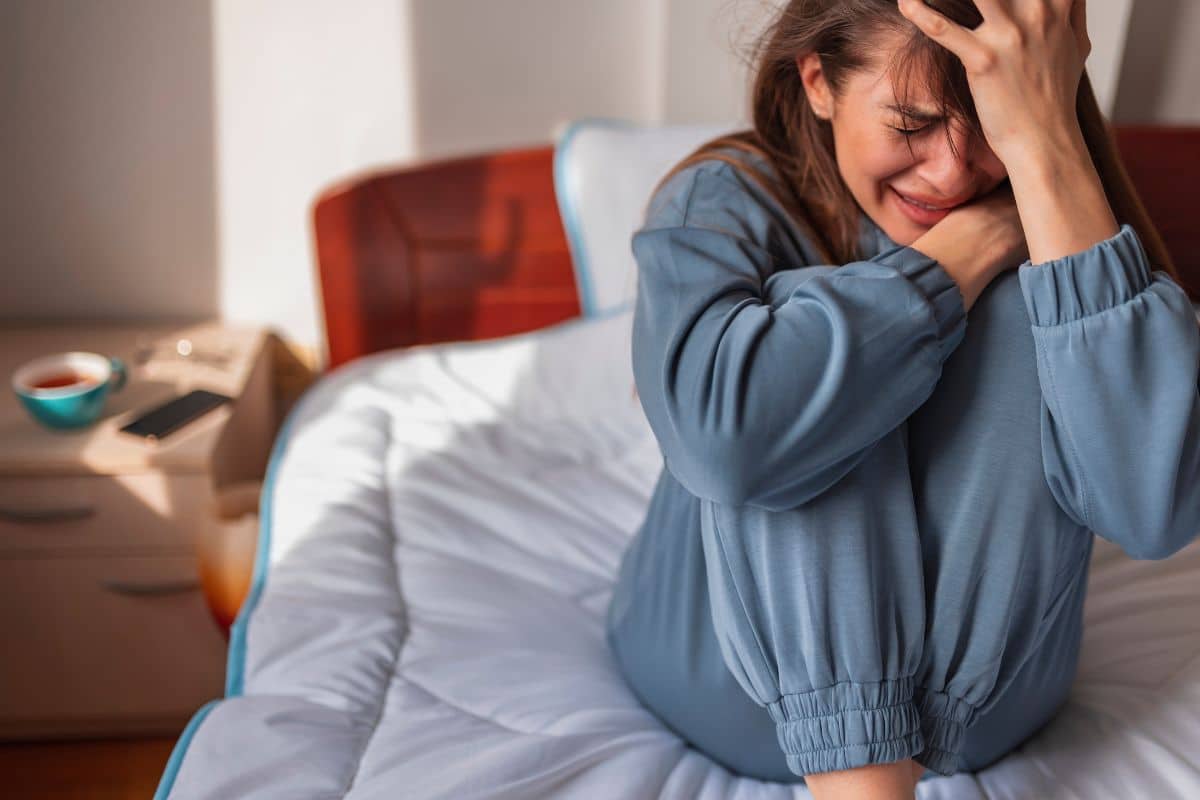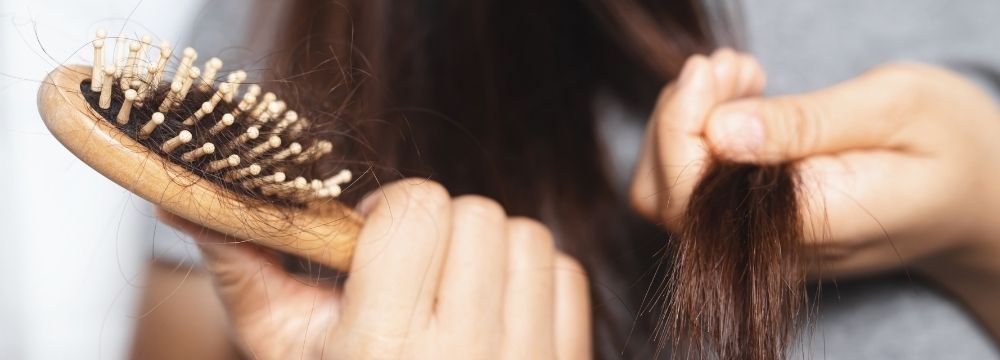
You step out of the shower, run a towel over your head, and there it is: a clump of hair where a few strands should be. Or you notice the drain clogging faster, the brush filling up, the pillowcase collecting more than it used to. That moment is frightening, and the fear itself adds to whatever stress you were already carrying. If you’ve been living through a stretch of high anxiety, there’s a real chance the two are connected. The reassuring part is that this kind of hair loss is usually temporary, and the hair tends to come back.
Everyone sheds. We lose strands every day through normal turnover of the hair cycle, and most of us never think twice about it. What gets people’s attention is a sudden jump in volume, hair coming out in handfuls instead of strands. When that happens during a period of sustained stress, anxiety is worth looking at as a driver.
Anxiety is the body’s response to situations it reads as stressful, threatening, or uncertain. Everyone feels it from time to time. For people with an anxiety disorder, that response shows up often enough and intensely enough to interfere with daily life. It can surface psychologically and physically, through racing thoughts, nausea, muscle tension, headaches, and sleep that won’t come. Hair loss belongs on that list too, even though it rarely gets mentioned when people talk about what anxiety does to the body.
How Does Stress Actually Cause Hair Loss?
The mechanism is more specific than “stress is bad for you.” According to the Mayo Clinic, significant stress can push large numbers of hair follicles into a resting phase at once. Hair has a growth cycle, and follicles normally cycle through it on their own staggered schedule. A major stressor can knock a big share of them into rest at the same time. A few months later, those resting hairs let go, often all at once while you’re washing or combing.
That delay is one reason the connection is easy to miss. The shedding tends to start about three months after the triggering event, and it can range anywhere from one to six months out, according to the Cleveland Clinic. By the time the hair falls, the hardest stretch may feel like it’s behind you, so you don’t always link the two. Other things can trigger the same resting-phase shift, including thyroid problems, major illness, surgery, and rapid weight loss, which is part of why a proper evaluation matters.
Types of Stress-Related Hair Loss
The Mayo Clinic describes three forms of hair loss linked to stress, and they work differently from one another.
Telogen effluvium is the most common of the three. It’s the resting-phase shedding described above, where stress moves follicles into rest and the hair sheds faster than usual from across the whole scalp. It often reads as overall thinning rather than bald spots, and it’s the type most directly tied to a stressful or anxious period.
Alopecia areata shows up as patchy loss, with round bald spots roughly the size of a coin. Its root cause is the immune system attacking hair follicles, and the Mayo Clinic notes that severe stress is one of several factors thought to contribute, rather than the cause on its own. This one usually calls for medical evaluation by a dermatologist.
Trichotillomania is the urge to pull out one’s own hair, from the scalp, eyebrows, or elsewhere. For many people it’s a way of managing difficult feelings, including tension, anxiety, boredom, or frustration. It’s classified as a body-focused repetitive behavior and responds well to mental health treatment, which makes naming it honestly the first step.
When Stress and Hair Loss Become a Cycle
Anxiety and hair loss can feed each other. The shedding shows up, you start worrying about your health and your appearance, and that worry raises your stress level, which is exactly the conditions that produced the shedding in the first place. Breaking the loop usually means treating the anxiety underneath it, not just the symptom you can see in the mirror.
Stress doesn’t stay in one lane. It touches sleep, mood, relationships, and physical health all at once. For some people, anxiety becomes severe enough that it stops being a passing state and starts running daily life. When that happens, structured treatment for anxiety can do what willpower and self-help often can’t, by getting at the cause instead of waiting out the next wave.
When Should I See a Doctor About Hair Loss?
If your hair is coming out in a way that alarms you, start with a professional rather than guessing. A dermatologist can examine your hair and scalp and ask about what’s been going on in your life, because the picture of your stress over the past several months matters to the diagnosis. Be candid about it. A family doctor or a mental health clinician is also a reasonable first call, especially if anxiety is the thread running through everything else.
A workup can also rule out other causes, since hair loss has many possible drivers beyond stress. If a clinician finds nothing else, that points back toward stress as the likely factor, and toward treating it directly.
When Can I Expect My Hair to Grow Back?
For stress-related shedding, the outlook is good. The Cleveland Clinic notes that hair usually grows back within three to six months once the trigger resolves. The catch is the trigger. If the anxiety driving it stays in place, the shedding can linger, which is why the lasting fix is addressing the stress rather than only changing your shampoo.
Day-to-day stress management helps, including sleep, movement, and learning to set limits with the people and demands that drain you. For anxiety that runs deeper than a stressful season, those steps work best alongside clinical care. At Destination Hope, anxiety is treated as a primary condition, with psychiatrist-led evaluation and evidence-based therapy aimed at the source of the anxiety, not just its surface effects. When a substance use disorder is also in the picture, our dual diagnosis program treats both at the same time, since one rarely improves while the other is ignored.
Get Help for the Anxiety Underneath
Hair loss is one of the quieter ways anxiety shows up in the body, and it’s often a sign the stress has been building for a while. If you’re watching it happen and you already know your stress is high, you don’t have to sort it out alone. Our team can help you understand what’s driving the anxiety and build a plan to treat it. To talk with someone about admissions or ask a question, call (954) 302-4269.
Crisis and Emergency Resources
If you or someone you know is in a substance use or mental health crisis, help is available now. Contact the SAMHSA National Helpline at 1-800-662-HELP (4357) for free, confidential treatment referrals 24/7. Reach the 988 Suicide and Crisis Lifeline by calling or texting 988. The Crisis Text Line is available by texting HOME to 741741. For emergencies, call 911.