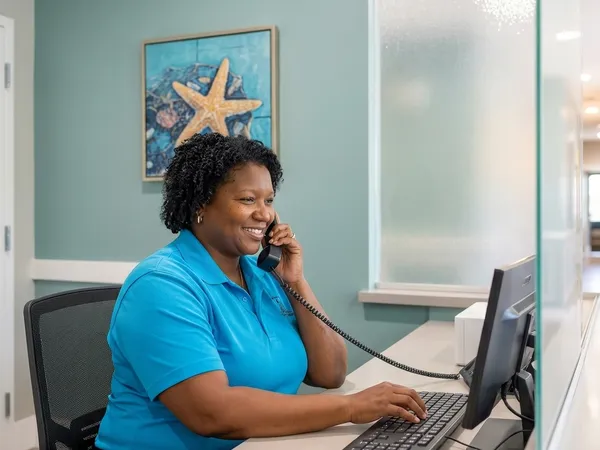
A residential treatment center is a place to live while you get full-time clinical care for a mental health condition, a substance use disorder, or both at once. You stay on site, the clinical team is there around the clock, and the work goes deeper than an hour-a-week appointment can reach. For someone whose symptoms have made daily life unmanageable, that level of structure is often where real stabilization starts.
Destination Hope is a residential mental health treatment center in Fort Lauderdale, Florida. We treat psychiatric conditions as the primary diagnosis, and we treat addiction as a co-occurring condition when it’s part of the picture. That order matters, and it’s the difference families notice when standard programs have already fallen short.
What Is a Residential Treatment Center?
Residential treatment sits in a defined spot on the continuum of care. The American Society of Addiction Medicine describes a single continuum with broad levels of care, from early intervention through outpatient services, intensive outpatient, residential, and medically managed inpatient care. Residential programs fall at the higher-intensity end of that continuum, below hospitalization but well above weekly outpatient sessions.
The defining feature is simple. You live where you’re treated. A residential stay gives you 24-hour clinical support, a daily schedule built around therapy and psychiatric care, and distance from the situations that have kept symptoms active. The National Institute of Mental Health notes that more intensive settings are appropriate when symptoms are severe and the risk of harm is high, which is exactly the threshold a residential program is built to meet.
When Is Residential Treatment the Right Level of Care?
Residential care is indicated when a less intensive setting can’t keep a person safe or hasn’t produced progress. ASAM’s framework matches people to a level of care through a multidimensional assessment, with the goal of placing each person in the least intensive setting that’s still safe and effective. When outpatient therapy keeps stalling, when a 72-hour psychiatric hold ends with someone stabilized but still unwell, or when active symptoms make functioning at home unrealistic, residential is usually the next step up.
The people we see at this level often share a history. They’ve cycled through emergency rooms or short hospital stays. They’ve tried outpatient counseling and watched it lose ground. A standard rehab may have turned them away because of active psychosis or suicidal ideation. That gap, between a crisis unit that discharges too soon and a program that won’t take high-acuity cases, is the space residential mental health treatment is meant to fill. You can see how the levels connect on our levels of care overview.
Treating Mental Health and Addiction Together
Mental illness and substance use frequently travel together. SAMHSA’s 2024 National Survey on Drug Use and Health found that roughly 21 million U.S. adults had both a mental illness and a substance use disorder in the same year. When both are present, treating them at the same time produces better outcomes than treating one and hoping the other follows.
SAMHSA identifies integrated treatment for co-occurring disorders as the best practice, meaning the interventions for the mental health condition and the substance use disorder are combined rather than handled in separate silos. At Destination Hope, the psychiatric condition stays primary and the addiction is treated fully alongside it. Neither one gets subordinated to the other. If you want to understand how that works in practice, our dual diagnosis treatment page walks through it.
What a Day in Residential Treatment Looks Like
A residential day is built, not improvised. Psychiatry and medication management establish a baseline and adjust it as the team learns how someone responds. Individual and group therapy, often grounded in CBT and DBT, do the slower work of getting at the why behind the pain. Trauma-informed care, family involvement, and nutrition support round out the schedule. Our clinical team is built at a Masters level and above, so the person guiding the hardest sessions isn’t an entry-level counselor working past their depth.
Residential isn’t meant to be permanent. It’s the intensive front end of a longer path. As symptoms settle and skills take hold, most people step down to a partial hospitalization program, then intensive outpatient, then aftercare. That gradual handoff is the point. It eases someone back toward independent life instead of dropping them off a cliff at discharge. You can read more about what an inpatient stay involves on our residential treatment page.
Choosing a Residential Program
Accreditation and licensing tell you whether a program meets recognized clinical standards. Destination Hope has been Joint Commission accredited since 2006 and is licensed by the Florida Department of Children and Families and the Florida Agency for Health Care Administration. We’re LegitScript certified, we offer on-site medical detox, and our residential programming is gender-specific. Those are the markers worth checking before anyone trusts a facility with a loved one.
If you’ve been watching someone you love disappear into a diagnosis, and the usual options keep coming up short, residential treatment may be the level of care that finally breaks the cycle. Our admissions team can talk through whether it’s the right fit and what coming in would look like. Start with our admissions page or call us at (954) 302-4269.
Crisis and Emergency Resources
If you or someone you know is in a substance use or mental health crisis, help is available now. Contact the SAMHSA National Helpline at 1-800-662-HELP (4357) for free, confidential treatment referrals 24/7. Reach the 988 Suicide and Crisis Lifeline by calling or texting 988. The Crisis Text Line is available by texting HOME to 741741. For emergencies, call 911.