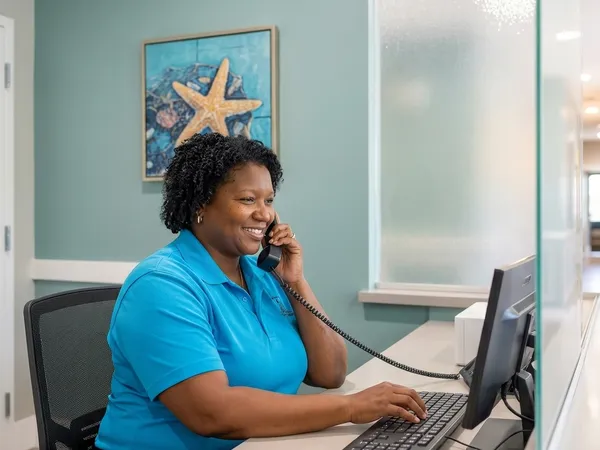
Lystra Lewis is a family therapist at Destination Hope, where she leads the family program and helps loved ones understand what recovery from mental illness and co-occurring substance use actually asks of them. We sat down with her to talk about her path into the work, what makes family therapy effective, and what she wishes more people knew about high-acuity residential care.
What Drew You to the Helping Field?
I’ve always worked in some capacity in the helping field. Looking back, my job as an active listener on a 24-hour domestic violence hotline in my early 20s was my official entry point. It was an eye-opening experience. The stories I heard terrified me at first, and they also motivated me to make a difference. Later I spent several years as a family court mediator. I’ve also stayed active in my faith community, leading women’s and youth groups and facilitating retreats and workshops on social issues and empowerment.
What Traits Matter Most for a Family Therapist?
I’m a good listener, and I have a natural knack for reading people. That lets me create a sense of safety, which is what allows me to gently challenge clients and their families to have the difficult conversations that lead to healing.
How Do the Family Program Weekends Bring Families Closer?
It’s heartwarming to watch a family member start to understand that mental illness and addiction are conditions, not character flaws. That shift creates room for families to see that while their loved one is responsible for the choices they make in recovery, many factors shape those choices. As the perspective changes, empathy grows, and that’s where the deeper connection between a family and their loved one comes from. The weekend also makes space for hard conversations. It gives families a chance to commit, or recommit, to healing as a unit, take accountability, and begin making amends.
What Would You Tell a Family That’s Hesitant to Seek Treatment for a Loved One?
The decision to get help for someone you love is frightening, and it’s also one of the best choices you’ll ever make. Treatment gives your loved one a way to take their life back from untreated mental illness and addiction. Families often tell me they’re afraid of their loved one’s anger. Remember that someone in crisis isn’t in a place to make healthy choices on their own. They need your help. In my experience, people who are angry at first end up grateful that their family insisted they get care. So summon your courage and make the call. We’re here to support both of you. If you’re ready to talk through what that looks like, our admissions team can walk you through the first steps.
What’s New in the Family Program at Destination Hope?
Since launching our monthly family program, we’ve added a Virtual Family Forum that supports families who can’t make it to our onsite family nights in person. We also started a quarterly In-The-Know series, an open platform that brings behavioral health professionals together with the community to share practical, current information for anyone supporting a loved one through mental illness or addiction.
What Do You Wish More People Knew About Destination Hope?
That Destination Hope is truly a dual diagnosis facility with the capacity for long-term care. I once worked with a client who stayed with us for about three months. Many treatment centers say they treat dual diagnosis, but they don’t have the clinical depth to address mental health as a primary condition. Here, the team is built at a Masters level and above, and that’s the difference. We treat the mental health condition fully, alongside substance use when it’s present, rather than bolting a label onto an addiction program.
What Do You Love to Do in Your Free Time?
I love riding through our local parks with my nephew. Hugh Taylor Birch State Park is one of my favorites. I recently picked up gardening, which turns out to be surprisingly relaxing. I’m thrilled about the tomatoes that are finally bearing fruit.
Do You Have a Favorite Motto?
“It always seems impossible until it’s done.”
Talk With Our Team
Lystra is one of the Masters-level clinicians who make up our family program and broader clinical team. If you’ve watched someone you love struggle with mental illness or co-occurring substance use and you’re not sure where to turn, we can help you understand the options. Call Destination Hope at (954) 302-4269 to speak with someone who has seen this before.
Resources for Support
If you or someone you know needs immediate mental health support, free and confidential help is available. The 988 Suicide and Crisis Lifeline can be reached by calling or texting 988. The Crisis Text Line is available by texting HOME to 741741. The SAMHSA National Helpline at 1-800-662-HELP (4357) provides treatment referrals around the clock.