Discharge day feels like a finish line. For most people leaving residential treatment, it is the start of the hardest stretch. The psychiatry, the daily therapy, and the people who understood the plan stay behind, and real life comes back all at once. Alumni support networks for addiction recovery aftercare and mental health recovery exist to close that gap, so the work done in treatment keeps going after the door closes.
If you are a parent, spouse, or partner reading this, you may already know the pattern. Your loved one stabilizes in care, comes home, and slowly loses the structure that was holding them steady. An alumni network is one of the most practical ways to keep that structure in place.
The short answer: An alumni support network is an ongoing community of people who completed the same treatment program, connected through regular meetings, peer mentorship, and contact with the clinical team. It matters because mental illness and substance use disorders are chronic conditions that need long-term management, not a single episode of care. Staying connected after discharge keeps support in place during the months when people are most likely to lose ground.
Key Takeaways
- Recovery from serious mental illness or addiction is managed over time, like other chronic conditions. NIDA reports relapse rates for substance use disorders of 40–60%, similar to hypertension and asthma.
- Recovery is common. In 2025, 44.1 million U.S. adults considered themselves in recovery from a mental health issue and 22.3 million from a drug or alcohol problem (SAMHSA).
- SAMHSA names community (supportive relationships and social networks) as one of four dimensions of recovery.
- Peer support has a moderate evidence base for people with serious mental illness and for people with substance use disorders.
- Destination Hope alumni in Tamarac and across South Florida meet every other Saturday, in person and on Zoom.
What Is an Alumni Support Network?
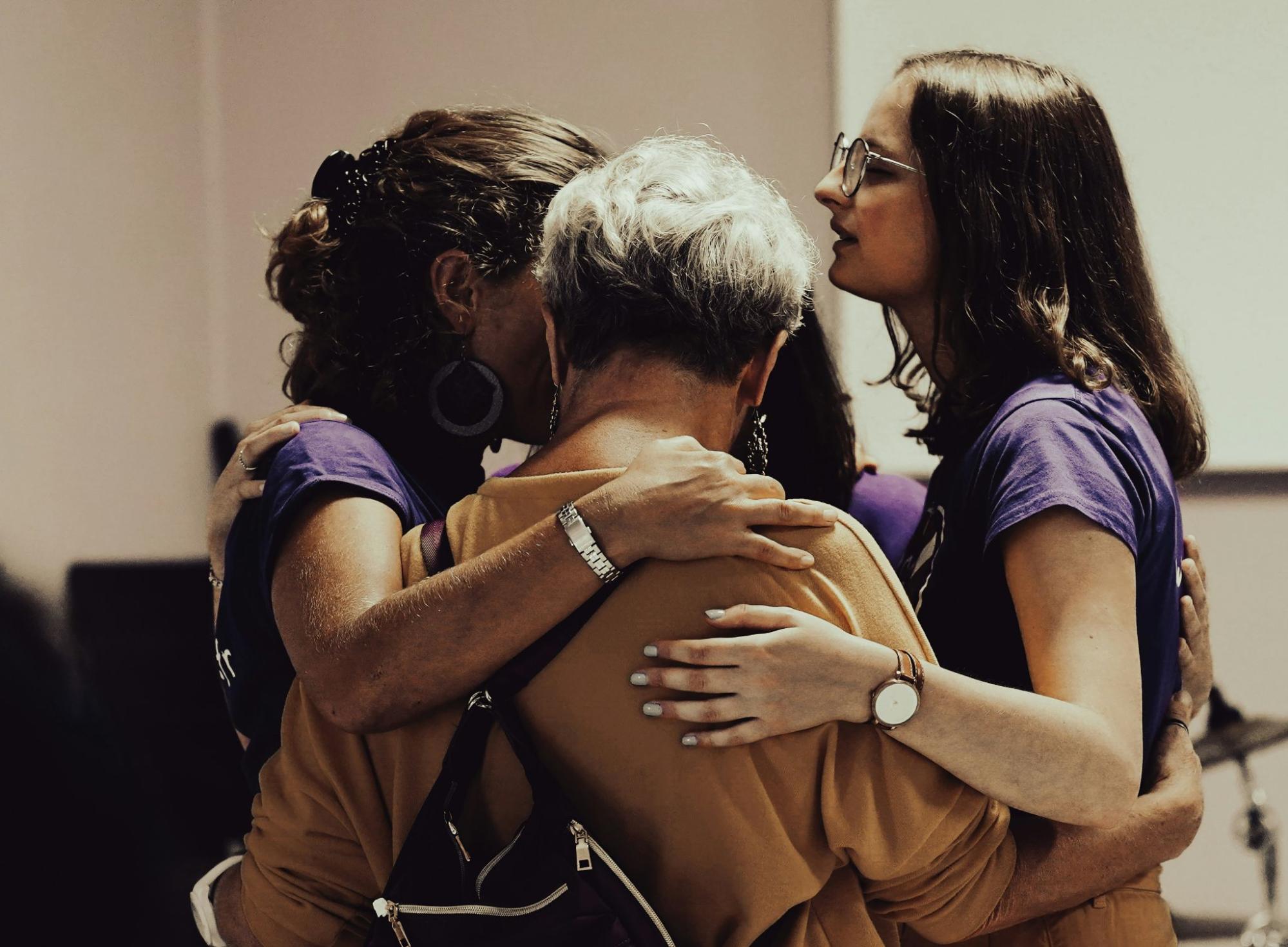
An alumni support network is a structured community run by a treatment program for the people who have completed it. It usually includes recurring alumni meetings, peer mentorship, social and educational events, and a direct line back to the clinical team. Unlike a general support group, everyone in the room shares the same treatment experience and often the same clinicians.
Aftercare is the individualized plan that follows discharge: continuing therapy, psychiatric follow-up, medication management, and relapse prevention work. An alumni network sits alongside that plan. Aftercare is clinical and personal; the alumni network is communal and ongoing.
The reason this matters comes from how recovery itself is defined. The Substance Abuse and Mental Health Services Administration describes four dimensions that support a life in recovery:
- Health: managing symptoms and making choices that support physical and emotional well-being.
- Home: a stable, safe place to live.
- Purpose: meaningful daily activity, such as work, school, volunteering, or caregiving.
- Community: relationships and social networks that offer support, friendship, love, and hope.
Treatment builds the first dimension. An alumni network is built to protect the fourth, and SAMHSA notes that recovery is supported by peers, friends, and family members, not by clinicians alone. For more on the wider circle of support, see our guide to building a support network after treatment.
Why the Months After Treatment Matter So Much
Leaving treatment means going from 24-hour clinical structure to an ordinary week, often in the same home, with the same stressors that came before. That transition is where gains made in care are easiest to lose, and it is not a sign that treatment failed or that anyone did something wrong.
Recovery is managed like a chronic condition
The National Institute on Drug Abuse’s Drugs, Brains, and Behavior: The Science of Addiction compares substance use disorders with other chronic illnesses. NIDA reports relapse rates of 40–60% for substance use disorders, compared with 50–70% for both hypertension and asthma. Its conclusion is that relapse signals a need to resume, adjust, or change treatment, not that treatment was wasted.
The same logic applies to serious mental illness. Depression, bipolar disorder, schizoaffective disorder, PTSD, and psychotic disorders are rarely resolved in a single stay. They are stabilized, then managed, and management depends on people noticing early when something is slipping.
Triggers come back home
NIDA identifies stress cues tied to past use (people, places, things, and moods) as among the most common triggers for relapse. For someone with a primary psychiatric condition, the equivalent is a return to the conflicts, isolation, sleep disruption, or missed medications that preceded the last crisis. A relapse prevention plan names these triggers in advance; see relapse prevention strategies that work.
Isolation makes everything harder
The U.S. Surgeon General’s 2023 advisory, Our Epidemic of Loneliness and Isolation, links a lack of social connection to higher risk of depression and anxiety. HHS also stated that lacking connection can raise the risk of premature death to levels comparable to smoking daily.
People leaving care often lose their social world at the same moment. Old relationships may be unsafe or strained, and new ones have not formed yet. If your loved one was recently discharged from a short hospital stay rather than a full program, our post on what comes next after a psychiatric hold in Broward County covers that gap in detail.
How Alumni Support Networks Help Addiction Recovery Aftercare and Mental Health Recovery
Alumni networks work because they extend three things treatment provides: connection, accountability, and access to help. The research behind each is stronger than many families expect.
Peer support has a real evidence base
Peer support is help from someone with lived experience of the same condition. A SAMHSA-funded review by Chinman and colleagues, “Peer Support Services for Individuals With Serious Mental Illnesses: Assessing the Evidence” (Psychiatric Services, 2014), rated the evidence for peer support as moderate for people with serious mental illness or co-occurring disorders.
A companion review by Reif and colleagues, “Peer Recovery Support for Individuals With Substance Use Disorders: Assessing the Evidence” (Psychiatric Services, 2014), also found moderate evidence. The outcomes it described included lower relapse rates, better treatment retention, and stronger relationships with treatment providers.
Continuing care helps most when risk is highest
Continuing care is any structured support that follows an intensive phase of treatment. James McKay’s 2021 review in Alcohol Research: Current Reviews, “Impact of Continuing Care on Recovery From Substance Use Disorder”, found that research generally supports continuing care for adults and adolescents. It also found that people at higher risk of relapse may benefit more. For clients leaving high-acuity residential care, that describes most of the room.
What an alumni network actually does
- Replaces lost structure. A standing weekly meeting gives the week an anchor when the treatment schedule disappears.
- Catches problems early. Peers and staff who know someone’s baseline often notice a change in mood, sleep, or engagement before family does.
- Shows that recovery is possible. Newer alumni see people months and years past discharge living stable lives.
- Gives people a role. Mentoring a newer graduate turns someone from a person who needed help into a person who offers it, which supports SAMHSA’s purpose dimension.
- Keeps the door open. If symptoms return, the path back to the clinical team is already familiar.
Recovery is common, and communities help sustain it
According to SAMHSA’s 2025 National Survey on Drug Use and Health, 69.4% of adults who ever had a mental health issue (44.1 million people) consider themselves in recovery or recovered. Among adults who ever had a drug or alcohol problem, 73.0% (22.3 million people) said the same.
The Recovery Research Institute’s National Recovery Study (Kelly et al., 2017) found that 22% of adults who resolved an alcohol or drug problem used newer recovery supports, such as recovery community centers, recovery residences, and recovery ministries. Alumni programs are part of that same recovery-support landscape.
Alumni Program vs. Aftercare vs. Mutual-Help Groups
These three supports work best together, and they are not interchangeable. An alumni program is not a replacement for psychiatric follow-up, and a community meeting is not a replacement for either.
| Alumni program | Clinical aftercare | Mutual-help groups | |
| What it is | Ongoing community for graduates of one treatment program | Individualized clinical plan after discharge | Free, peer-run community meetings |
| Who leads it | Treatment program staff and alumni | Licensed clinicians and prescribers | Peers |
| Who attends | People who completed the same program | The individual (and family, in family sessions) | Anyone with a shared concern |
| Typical elements | Weekly meetings, mentorship, events, staff contact | Therapy, psychiatry, medication management, relapse prevention plan, case management | Recurring meetings, sponsorship or peer partners |
| Main strength | Shared history, continuity with the treatment team | Clinical oversight of symptoms and medications | Wide availability, many formats, no cost |
| Examples | Destination Hope alumni meetings | Continuing individual therapy, family therapy | 12-step groups, SMART Recovery, dual-recovery groups |
A strong post-discharge plan usually uses all three. Our aftercare planning builds the clinical layer before treatment ends, and our beginner’s guide to 12-step programs covers one of the most common mutual-help options.
What Families Should Know About Alumni Support
Families are part of the support network, and they need support of their own to do that well. If you have spent months or years watching someone you love disappear into their illness, exhaustion is not a failure of love. It is what happens when one household carries a clinical problem alone.
How families can help
- Treat alumni meetings like medical appointments. Protect the time on the calendar, including Saturday evenings.
- Ask, don’t monitor. “How was the meeting?” invites connection. Checking attendance invites resentment.
- Learn the relapse prevention plan. Knowing your loved one’s early warning signs lets you respond calmly instead of in crisis.
- Notice withdrawal. Skipping meetings, avoiding calls, and dropping contact with peers are often early signs that something is changing. Name it gently and early.
- Keep your own support. A family member who is supported is steadier for everyone.
Family alumni are a network too
At Destination Hope, family involvement continues past discharge. The Family Program includes a bi-weekly virtual Family Forum for continued education and peer support, and a Family Ambassador Network built on the lived experience of family alumni. Parents and spouses can talk with people who have stood exactly where they are standing.
If you are still deciding whether residential care is the right step, our resources for families walk through what to expect.
Staying Connected After Treatment in Broward County and South Florida
Geography shapes whether people keep showing up. An alumni meeting across the state is easy to skip; one within a short drive, or on a screen at home, is much easier to keep.
Destination Hope is located at 8301 W McNab Rd in Tamarac, in western Broward County. Alumni who live in Tamarac, North Lauderdale, Coral Springs, and the greater Fort Lauderdale area can attend in person. Alumni who have moved to Palm Beach County, Miami-Dade, or out of state can join the same weekly meeting on Zoom, so a move after discharge does not mean losing the community.
South Florida also has a wide range of community resources that can sit alongside an alumni network, including therapists, psychiatrists, and mutual-help meetings in most neighborhoods. Our guide to mental health resources in South Florida is a good place to start building that local layer.
The Destination Hope Alumni Community
At Destination Hope, the alumni network is part of the continuum of care, and transition planning toward aftercare begins during the residential stay. That matters for the people we serve. Our clients come to us with primary mental health conditions such as major depressive disorder, bipolar disorder, schizoaffective disorder, psychosis, PTSD, and complex trauma, often with co-occurring substance use. These are people who need a community that understands psychiatric illness, not only addiction.
What the alumni program includes
- Weekly alumni meetings every other Saturday from 7:00 to 8:00 PM, in person and online through Zoom.
- Peer mentorship, where experienced alumni help guide people who are newly moving into long-term aftercare.
- Ongoing contact with alumni, plus speaking opportunities for those who want to share their story.
- Educational seminars, group gatherings, and community service events, including quarterly alumni gatherings.
- A direct connection to clinical care. Before discharge, every client builds a relapse prevention plan with the treatment team that names their specific triggers. Continuing individual therapy, family therapy, and case management for housing, employment, and finances are available, with case management often continuing for six months to a year.
Built on clinical depth
The network grows out of residential mental health treatment that is psychiatrist-led and delivered by a Masters-level-and-above clinical team, with gender-specific tracks and on-site medical detox when needed. Destination Hope was founded in 2006, is accredited by The Joint Commission, is licensed by the Florida Department of Children and Families and the Florida Agency for Health Care Administration, and is LegitScript certified.
Alumni like Will, who arrived after burning nearly every bridge he had, describe what changed when their mental health was treated alongside their substance use. You can read his story and others on our alumni stories page.
Planning for life after treatment starts before admission. If someone you love needs residential mental health care and a community that stays with them afterward, call our admissions team at (954) 302-4269, 24/7 and confidential. Learn more about the Destination Hope alumni program.
Frequently Asked Questions
What is an alumni support network in addiction recovery aftercare?
An alumni support network is an ongoing community for people who completed the same treatment program. It typically includes regular meetings, peer mentorship, events, and continued contact with the treatment team. It works alongside clinical aftercare, such as therapy and psychiatric follow-up, rather than replacing it.
How is an alumni program different from aftercare?
Aftercare is an individualized clinical plan, while an alumni program is a shared community. Aftercare covers therapy, medication management, relapse prevention, and case management. The alumni program provides peer connection and structure with people who went through the same program.
Do alumni networks help with mental health conditions, or only addiction?
They help with both. A SAMHSA-funded review in Psychiatric Services found moderate evidence for peer support among people with serious mental illness or co-occurring disorders. Destination Hope treats mental health as a primary condition, so its alumni community includes people recovering from psychiatric illness, with or without co-occurring substance use.
Does relapse mean treatment didn’t work?
No. NIDA reports relapse rates of 40–60% for substance use disorders, similar to hypertension and asthma, and treats relapse as a sign to resume or adjust treatment. A connected alumni community makes it easier to reach back out quickly if symptoms return.
Can I attend Destination Hope alumni meetings if I don’t live near Tamarac?
Yes. Weekly alumni meetings run every other Saturday from 7:00 to 8:00 PM, both in person at 555 South Andrews Ave, Pompano Beach, Florida, 33069 suite 110 and on Zoom. Alumni anywhere in South Florida or beyond can stay connected online.
How can family members support a loved one’s alumni involvement?
Protect the meeting time, ask about it without monitoring it, and learn the relapse prevention plan. Families can also get their own support through Destination Hope’s bi-weekly virtual Family Forum and Family Ambassador Network.
How long should someone stay involved in an alumni program?
There is no set end date. Because mental illness and substance use disorders are managed over time, many people stay connected for years, often moving from receiving mentorship to offering it.
Recovery Keeps Going After Discharge. So Do We.
When a hospital stabilizes but doesn’t treat, and a standard rehab can’t handle what your loved one is going through, Destination Hope was built for that gap. Treatment here is psychiatrist-led and clinician-delivered, and the support continues long after discharge through aftercare and a South Florida alumni community that meets every week.
If you are ready to talk about care for yourself or someone you love, call (954) 302-4269, any time, or start the admissions conversation. We serve Tamarac, Fort Lauderdale, and all of Broward County, and we accept TRICARE and most major insurance plans.
Crisis and Emergency Resources
If you or someone you know is in a mental health or substance use crisis, help is available now.
- SAMHSA National Helpline: 1-800-662-HELP (4357), free and confidential, 24/7
- 988 Suicide & Crisis Lifeline: call or text 988
- Crisis Text Line: text HOME to 741741
- In an emergency, call 911.
[Draft post ends here]
Sources
- National Institute on Drug Abuse. Drugs, Brains, and Behavior: The Science of Addiction, Treatment and Recovery.
- Substance Abuse and Mental Health Services Administration. SAMHSA Releases Annual National Survey on Drug Use and Health (2025 NSDUH), July 27, 2026.
- Substance Abuse and Mental Health Services Administration. About Recovery: Guiding Principles and Four Major Dimensions.
- Chinman M, et al. Peer Support Services for Individuals With Serious Mental Illnesses: Assessing the Evidence. Psychiatric Services, 2014.
- Reif S, et al. Peer Recovery Support for Individuals With Substance Use Disorders: Assessing the Evidence. Psychiatric Services, 2014.
- McKay JR. Impact of Continuing Care on Recovery From Substance Use Disorder. Alcohol Research: Current Reviews, 2021.
- Office of the U.S. Surgeon General. Our Epidemic of Loneliness and Isolation, 2023.
- Kelly JF, et al. National Recovery Study summary, Recovery Research Institute, 2017.